
Meta • 2020–2021
Lessons from being a product designer at Meta
I was at Meta from 2020 to 2021, the sole designer for Messenger’s web surfaces. This isn’t one case study. It’s what Meta taught me: a few things I still do every day, and a few I happily left behind.
Design sprints
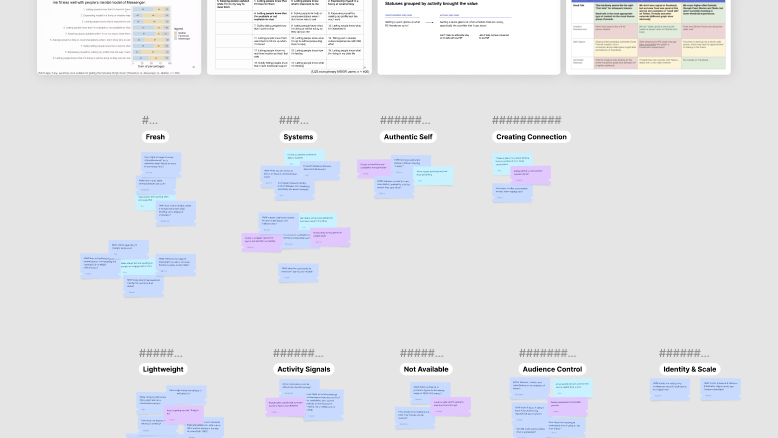
Design sprints felt unique at Meta. You pool together content creators, UX researchers, and designers to jam on ideas around a theme. It’s a few days to a week long, and rather formal. You kick off with an in-depth research presentation from the UX researchers, followed by multi-day brainstorms, and finally end with a presentation of high-fidelity prototypes. I found Meta’s design sprints particularly fun, as they were intentionally designed to really push your creativity, often like a mini-incubator for new messaging features. Plus, they allowed for collaboration with new people across the org.
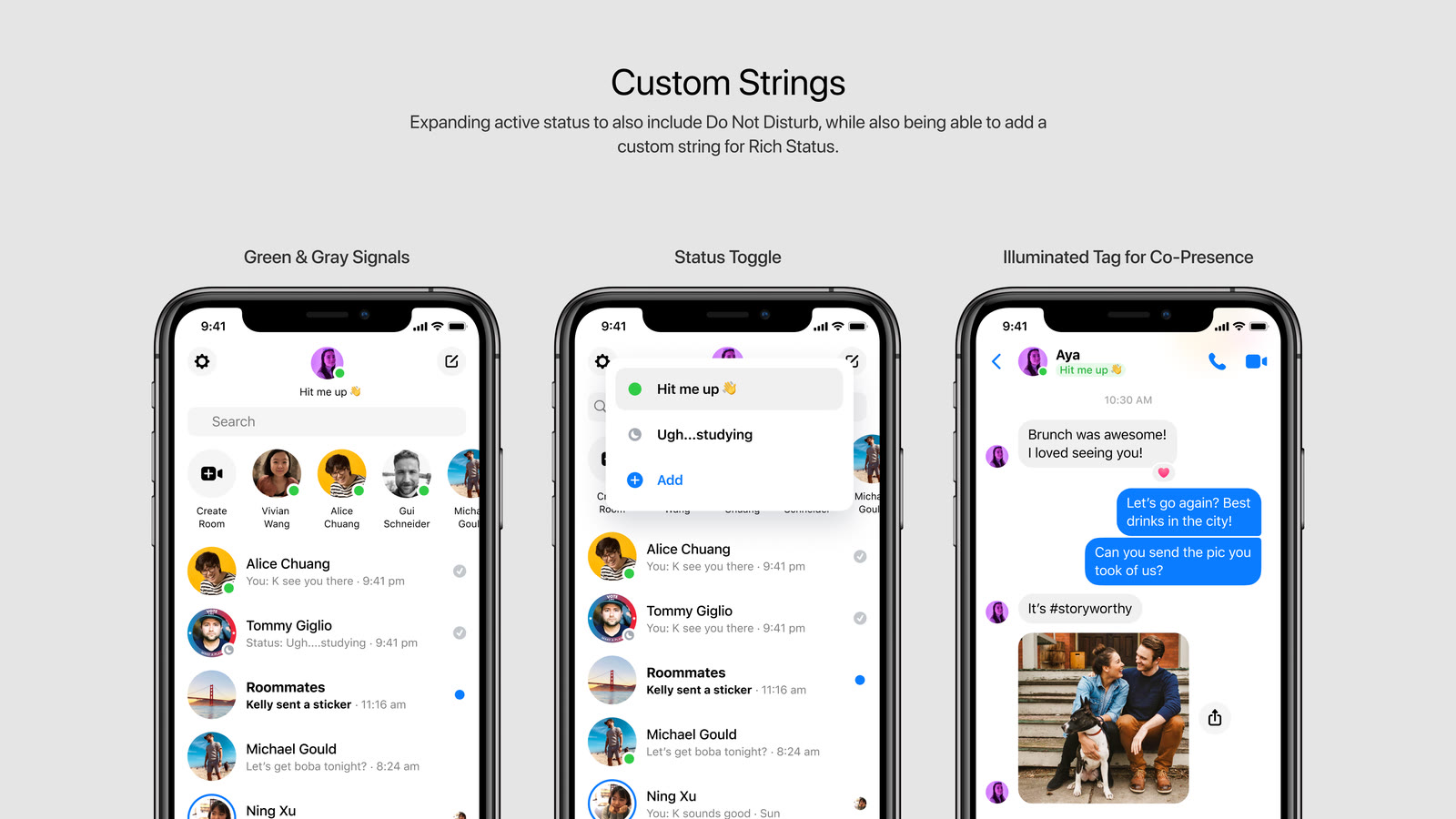
Origami as a prototyping tool
Another unique thing about Meta is the high bar of craft. For design this meant making high fidelity prototypes using Origami. It’s a patch based programming tool for making high fidelity prototypes. The tool is built by Meta so it had the added bonus of custom patches that could pull real customer data into your prototype.
Meta really promoted high-fidelity prototypes as part of its culture, which I personally believe in and still value to this day. You can probably do a lot of that prototyping with AI now, but it was a really interesting space to be in.
Employee-led products
One project I had the privilege to work on was improving accessibility navigation for the Messenger desktop app. We knew accessibility was broken and had been neglected for a while, and there was an opportunity for someone to take it on. So I took it on.
What was amazing is that there are so many employees at Meta. I was connected with people who use accessibility tools to do their work at Meta, and I partnered with someone who uses them firsthand. I asked them what they would improve, and learned how cell structures make a site’s hierarchy clear and easy to navigate. In the end, I proposed an improved keyboard navigation structure so that people with accessibility needs can navigate Messenger more smoothly. It was a unique privilege: partnering with real colleagues who would benefit from it, and doing it for the whole Messenger user base.
Cross-team collaboration
Another big thing about Meta is cross-team collaboration. One project in particular was community messaging, an initiative that came directly from Papa Zuck. We were in lockdown and Discord was getting popular, so there was an opportunity for a community-messaging strategy for Messenger.
It introduced a completely different information architecture and navigation structure across the Messenger app, messenger.com, and the Messenger desktop app. I’d never been part of an effort that big, one that needed approvals from so many directors in different parts of the org. It was a strong lesson in presenting work together and strategizing together about what the feature should be. I learned a lot about communicating ideas and getting alignment with cross-functional partners.
What I took with me
A lot of the work you do never sees the light of day. That’s the nature of a big tech company. What’s unique about Meta is that I learned distinct things I take with me to every role. Some things I leave out. I would much rather show leadership a working prototype on their phone than walk them through a 40-minute deck. That’s just how I like to get ideas through.